
Building a Feature from Scratch
Methodologies: Multiple survey rounds, data analytics, and thematic insights.
Contributions: Design, Product and Marketing.
Enabled golfers to register, track, and monitor their USGA Handicap Index, enhancing engagement and competitive play on GN Compete.
Impact
🔍 Research shaped the feature from concept to launch
👥 Built an internal golfer panel, unlocking continuous insights
🎯 Uncovered key motivations and barriers for casual players
💡 Guided design, onboarding, and marketing with confidence
Role
Lead UX Researcher
Goal
Identify barriers and motivations for Handicap Index adoption to inform feature design. Understand user needs, knowledge gaps, and engagement opportunities to shape a compelling experience. Leverage insights from surveys, analytics, and an internal golfer panel to guide design decisions and drive adoption.
Duration
4 weeks
Problem & Opportunity
GolfNow Compete aimed to deepen golfer engagement by introducing a USGA Handicap Index feature, allowing users to track their performance, monitor progress, and compete fairly with others. Beyond improving adoption and retention, this feature represented a clear business opportunity: increasing active engagement, driving repeat app usage, and creating a competitive differentiator in the golf tech market. By understanding how different types of golfers interact with performance tracking, the research provided actionable insights to make the feature accessible, motivating, and aligned with real user behaviors and expectations, ensuring both user satisfaction and measurable business impact.
Research Goals
🎯 How do golfers currently track performance and engage with Handicap Indexes, and what drives their usage?
🚧 What prevents golfers, especially casual players, from registering, and what incentives encourage ongoing engagement?
💡 Which features, flows, and touchpoints would make registration intuitive, approachable, and motivating, while maximizing active usage?
📈 How can insights be leveraged to increase engagement, retention, and positioning of GolfNow Compete as a leader in golf performance tracking?
Research Approach
Methods
• Proof-of-concept survey for internal participant panel
• External survey via UserZoom. Focused on motivations, pain points, and behavior to track handicap index scores.
• Data analysis and thematic insights to guide design decisions
Participants
🏌️♂️Active golfers, casual to advanced, both with and without a Handicap Index
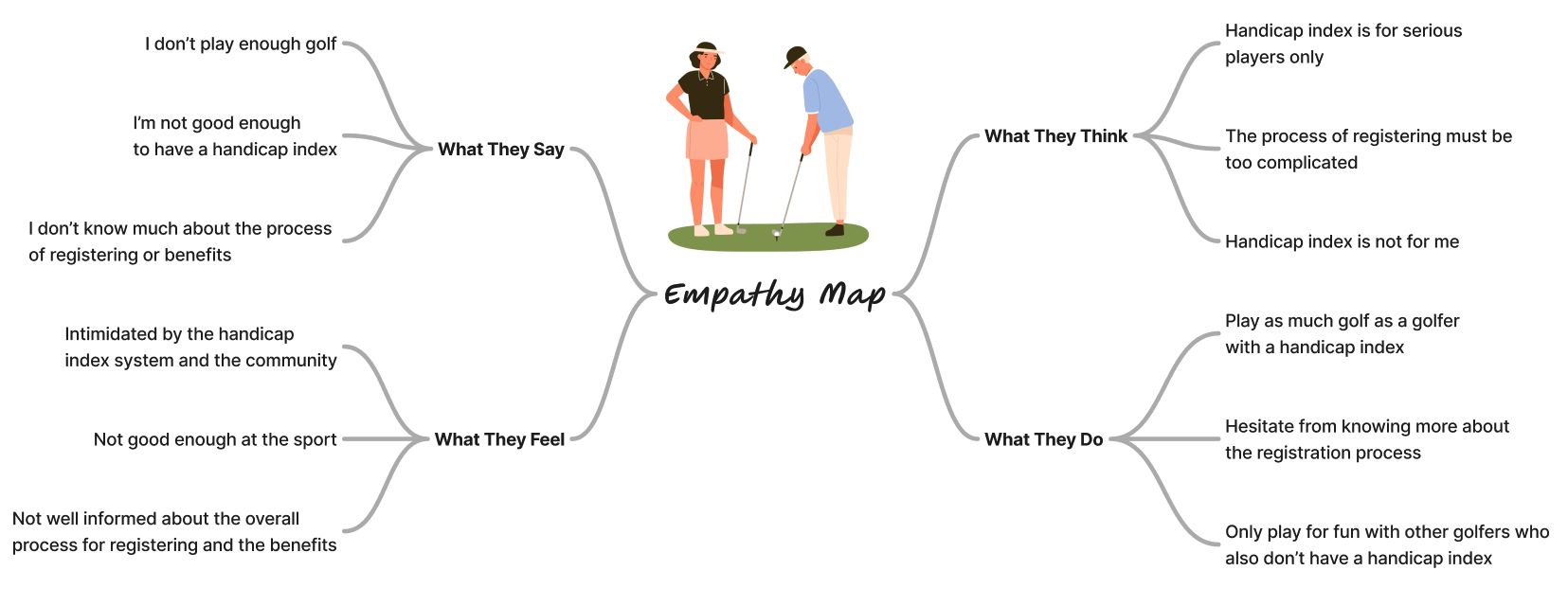
Empathy map created to communicate survey insights
Key Insights
Insight #1 — Golfers are motivated by performance tracking and fair competition
Evidence: Survey responses showed consistent focus on improving skills and maintaining competitive balance.
Implication: Design should emphasize progress tracking and highlight fair, balanced play.
Insight #2 — Knowledge gaps prevent registration for Handicap Index
Evidence: Many golfers didn’t understand the registration process or the benefits
Implication: Introduce clear onboarding guidance, educational content, and step-by-step registration
Product Implications
• 📝 Transparent, step-by-step Handicap Index registration
• 📊 Track and refine personal scores over time
• 🏌️♂️ Support competitive and social play for all golfers
Results
Research was the foundation of the Handicap Index feature, ensuring every product decision was grounded in real user needs and behaviors. By taking a user-centered approach from the very beginning, we were able to uncover actionable insights that directly shaped design, onboarding, and marketing strategies—setting the feature up for success and giving stakeholders confidence to move it forward.
Research as the backbone: Guided every decision from concept through development, ensuring the feature aligned with golfer needs and expectations
Built an internal golfer panel: Established a reusable panel of active golfers from scratch, improving research practices and enabling continuous, data-driven insights
Uncovered key motivations and barriers: Revealed how casual and competitive golfers perceive and interact with the Handicap Index, highlighting gaps in understanding, adoption barriers, and motivational drivers
Directly informed product strategy: Insights shaped design decisions, onboarding flows, and marketing messaging, maximizing accessibility, engagement, and long-term adoption
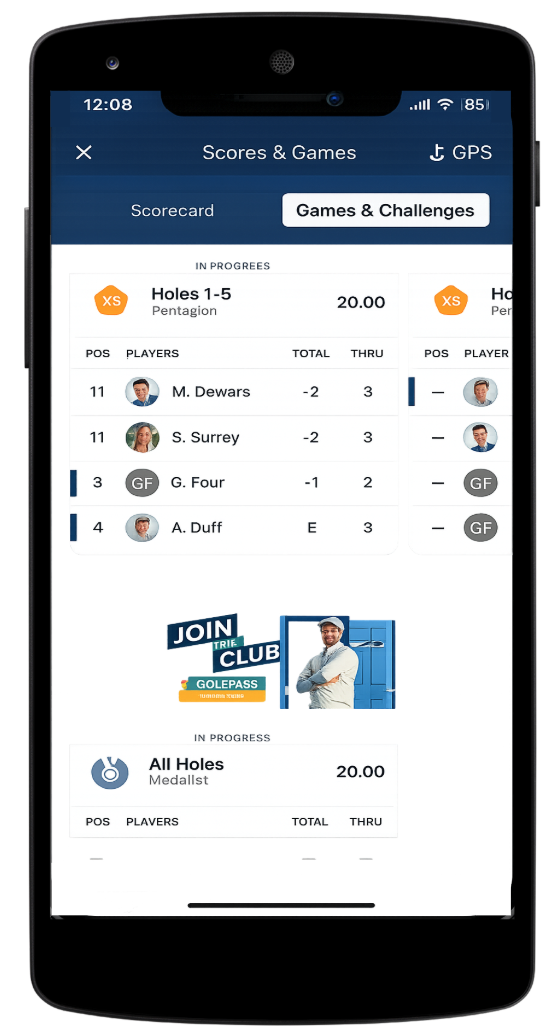
First mockup
Reflection
Building an internal panel from scratch and conducting iterative surveys provided rich insights into golfer behavior. Next steps include design iteration and concept testing to refine the Handicap Index feature, testing onboarding flows, and experimenting with engagement nudges to further increase adoption and ensure the feature meets the needs of both casual and competitive golfers.