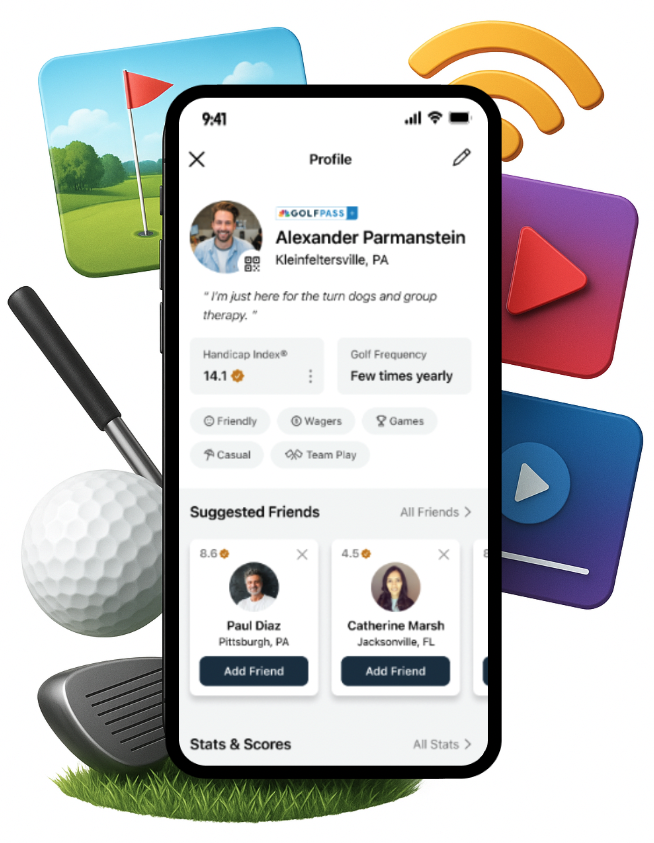
A Unified Product Experience
Methodologies
(Mixed-method) Card sorting, prioritization surveys (MaxDiff and Drag & drop), and usability tests.
Contributions: Design, Product and Data Analytics.
Unifying fragmented user data into a single profile experience to simplify account management and improve personalization across products (GolfNow, GolfPass, and Compete).
Impact
🔎 Revealed users’ mental models for profile organization
📌 Guided the information architecture of the unified profile
🧠 Uncovered gaps in feature clarity and terminology
📈 Informed product decisions around feature prioritization
Role
Lead UX Researcher
Goal
Identify which profile information matters most to users and how it should be organized across products. Align user expectations with business priorities to reduce redundancy and complexity. Inform a unified, streamlined profile experience that adds clarity, consistency, and value.
Duration
2 months
Problem & Opportunity
As the product ecosystem expanded, users interacted with multiple account-related features spread across different areas of the platform. Profile information, preferences, activity history, and account settings were fragmented across experiences.
This fragmentation created several problems:
• Users struggled to find important profile information
• Account management tasks required navigating multiple areas
• Feature discoverability was low
• Product teams lacked a shared framework for organizing profile functionality
The organization identified an opportunity to create a unified profile experience that would centralize user information, simplify navigation, and create a more cohesive product ecosystem.
Research Goals
🔍 How do users currently manage their accounts and profile information?
⭐ What profile features are most important to users?
🗂️ How should profile content be structured and organized?
🧠 What mental models do users have for account management?
Research Approach
Methods
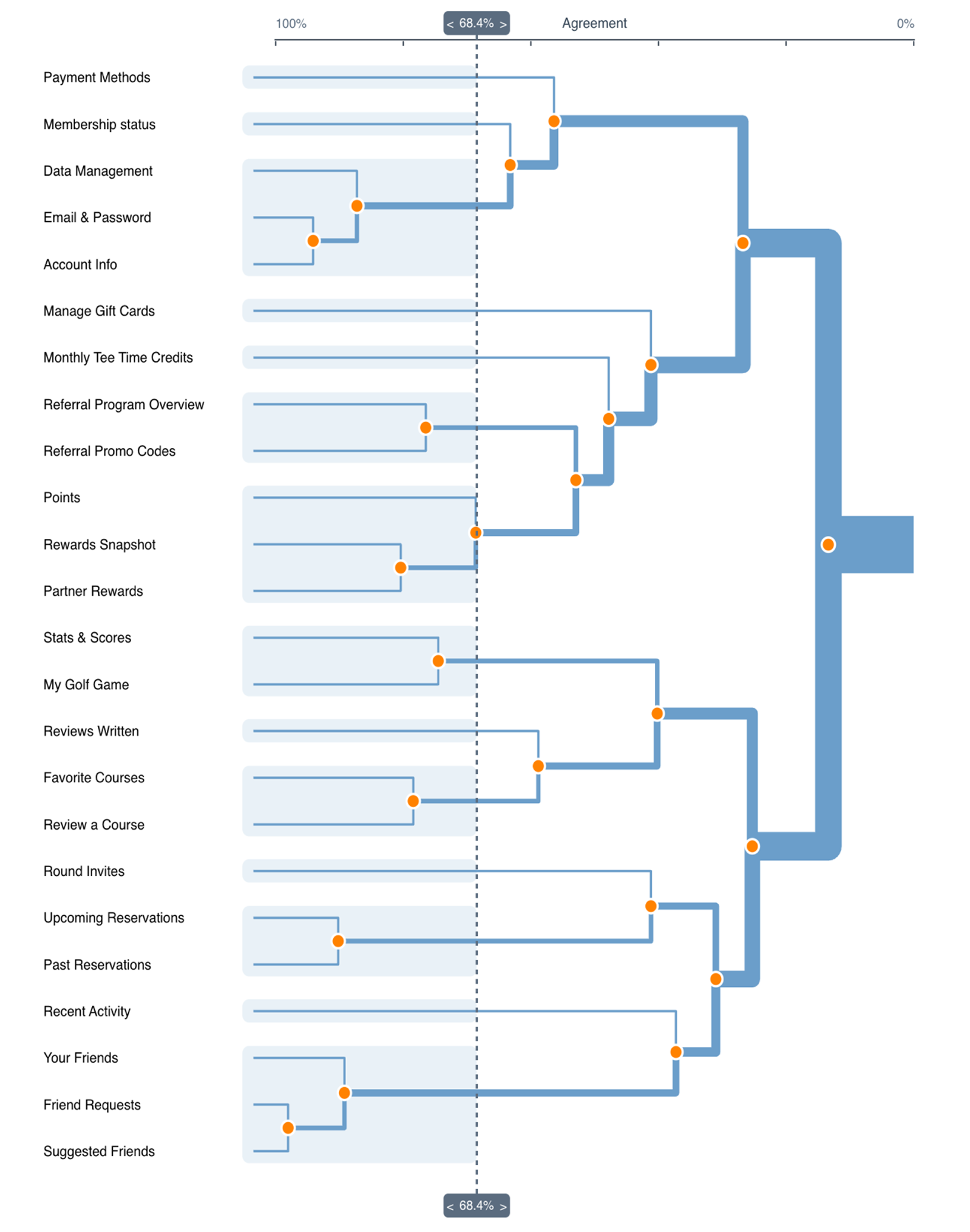
Card Sorting
• Identified how users naturally grouped profile features
• Informed the information architecture for the unified profile
Prioritization Survey
• Quantified which profile features users considered most valuable
• Helped teams focus development on high-impact functionality
Usability Testing
• Evaluated the clarity and discoverability of the new unified profile design
• Validated task completion and navigation efficiency
Participants
👥 Active platform users with existing accounts who regularly interacted with profile and account settings.
Card Sorting
Key Insights
Insight #1 — Users struggled to locate profile and account settings
Evidence: Participants often navigated through multiple menus before finding basic profile features like preferences, saved items, or account settings.
“I know it’s somewhere in my profile… I just don’t know where.”
Implication: A centralized profile hub would reduce navigation friction and improve task completion.
Insight #3 — Feature discoverability improved when profile content was grouped by intent
Evidence: Card sorting results revealed that users naturally organized profile features into a few clear categories such as: Account settings, Activity and history, Saved or personalized content, and Preferences.
Implication: Designing the profile structure around these categories significantly improved usability.
Insight #2 — Users expected profile experiences to follow familiar patterns
Evidence: Participants consistently expected profile pages to include clear sections for: personal information, activity history, preferences, and saved content. When these were distributed across the product, users perceived the experience as inconsistent.
Implication: The unified profile should align with common mental models of account management to reduce cognitive load.
Product Implications
Research informed several key product decisions:
🧭 Centralized profile hub for account management
🗂️ Clear information architecture based on user mental models
🧩 Grouped navigation sections for profile features
🔎 Improved discoverability for saved content and preferences
🌐 Consistent profile structure across the product ecosystem
Results
The research provided a clear foundation for how the unified profile experience should be structured and prioritized across the platform.
🗂️ Established the information architecture for the unified profile experience
Card sorting insights revealed how users naturally group profile features, guiding the structure and navigation of the redesigned profile.
⭐ Defined the hierarchy of profile features based on user value
Prioritization research identified the profile elements golfers considered most important, helping teams focus the experience around high-value functionality such as stats, scores, and golf activity.
🧩 Informed design decisions around feature grouping and navigation
Research findings helped designers organize profile content into clearer sections, making it easier for users to understand and navigate their account information.
🔤 Clarified ambiguous terminology across profile features
The study surfaced confusing labels and overlapping concepts, enabling teams to refine naming conventions and improve feature clarity.
🤝 Aligned product teams around a unified profile strategy
Research created a shared understanding of how profile experiences should function across multiple products, supporting a more consistent and scalable ecosystem.
🚀 Provided a research-backed foundation for future profile improvements
The insights continue to inform roadmap discussions around profile features, personalization opportunities, and account management experiences.
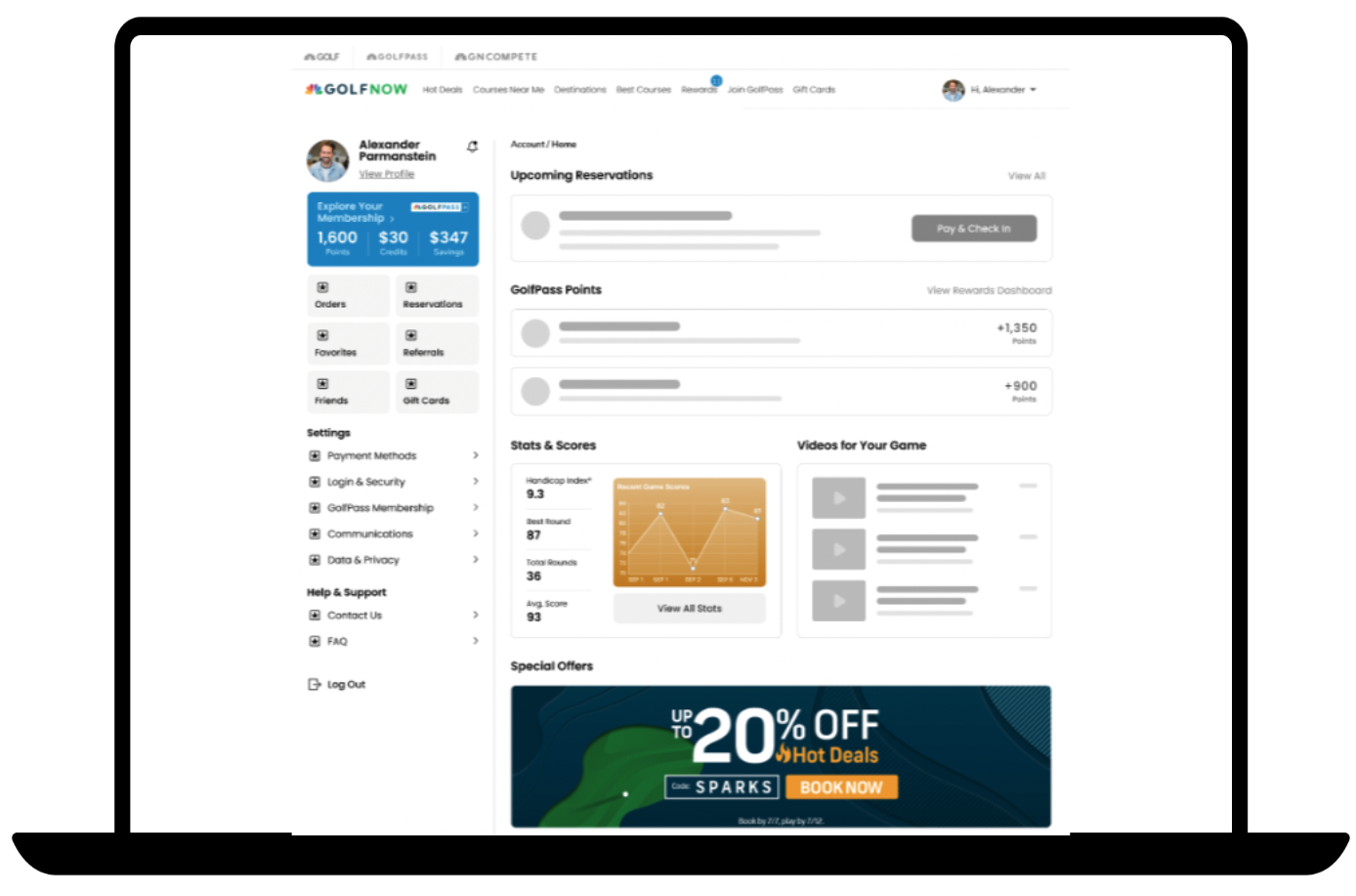
Initial Mockups
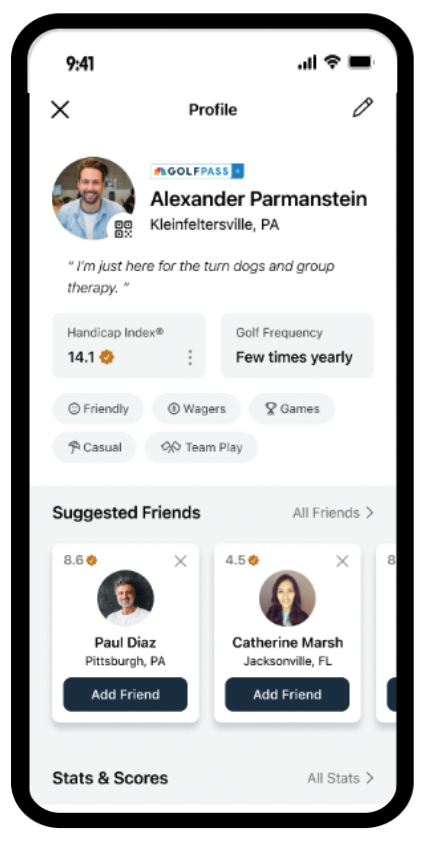
Profile view
Full profile view
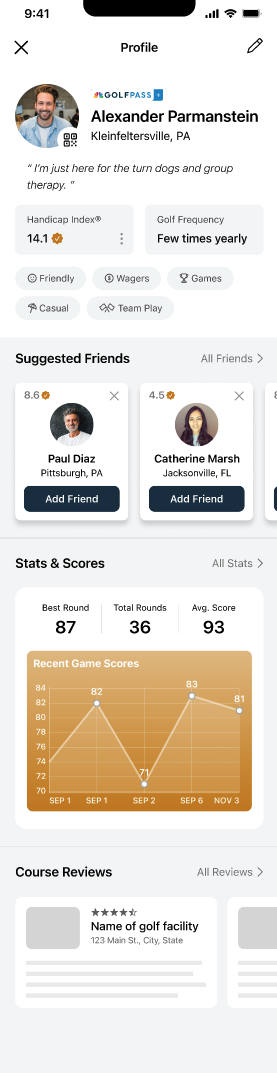
Desktop view
Reflection
This project reinforced how critical information architecture and mental models are when designing account-related experiences.
Even when individual features work well, fragmentation across a product ecosystem can create friction that users perceive as poor usability.
By combining qualitative and quantitative research methods, we were able to:
• understand user expectations
• validate structural decisions
• guide design with evidence
If the project continued, I would explore:
• longitudinal behavior changes after profile unification
• personalization opportunities within the profile experience
• how unified profiles could support future recommendation systems.